
“I Am a Tree”: Students Bring Climate Awareness to Life Through Creativity
In Kigali, Rwanda, youth are taking the lead in climate action by turning dance, drama, poetry, visual arts, and even fashion into powerful platforms for environmental awareness. Gender and Climate Resilience Specialist Rita Nishimwe has witnessed the impact of these young people firsthand and shares what goes into a “youth movement.”
What if the next generation of environmental changemakers weren’t in a conference room, but in a vibrant space of learning and creativity? In Kigali, Rwanda’s capital city, this vision is becoming a reality through a powerful youth-led initiative called Green City Clubs. Blending environmental education with art, community, and leadership, these school-based clubs are not only planting trees—they’re sowing the seeds of long-term change among students, parents, teachers, and surrounding communities.
Led by the Rwanda Young Water Professionals (RYWP) and supported by the Scaling Urban Nature-based Solutions for Climate Adaptation in Sub-Saharan Africa (SUNCASA) Project, the Green City Clubs are an inclusive, community-driven initiative already established in 17 schools across Kicukiro, Gasabo, and Nyarugenge Districts.
On June 5, 2025, to mark World Environmental Day, Green City Clubs organized a student-powered environmental competition hosted at Group Scolaire Kimisagara School in Nyarugenge district. The event wasn’t just a celebration; it was a revelation.
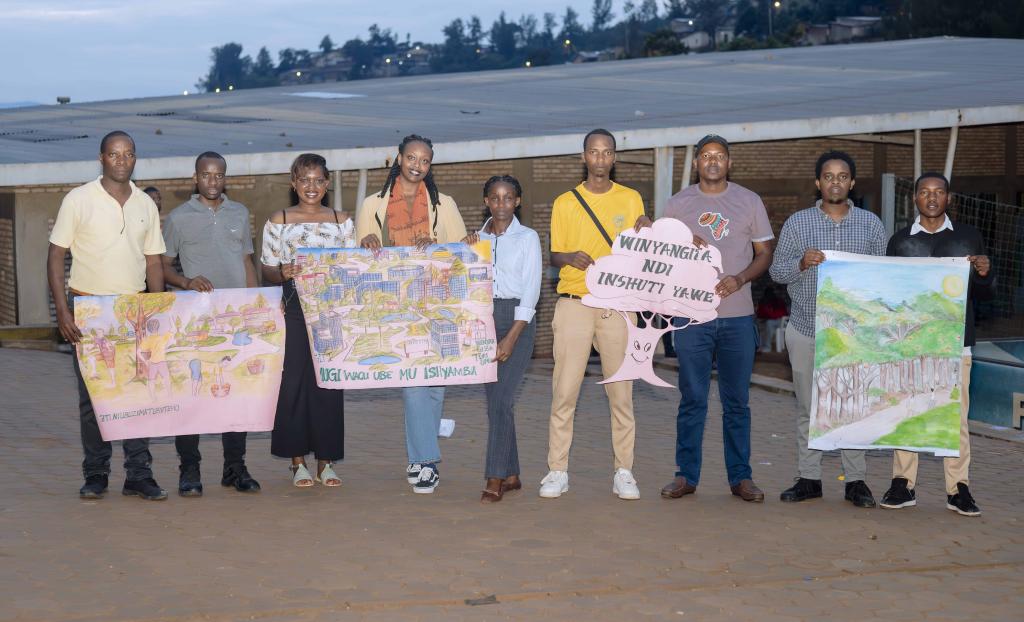
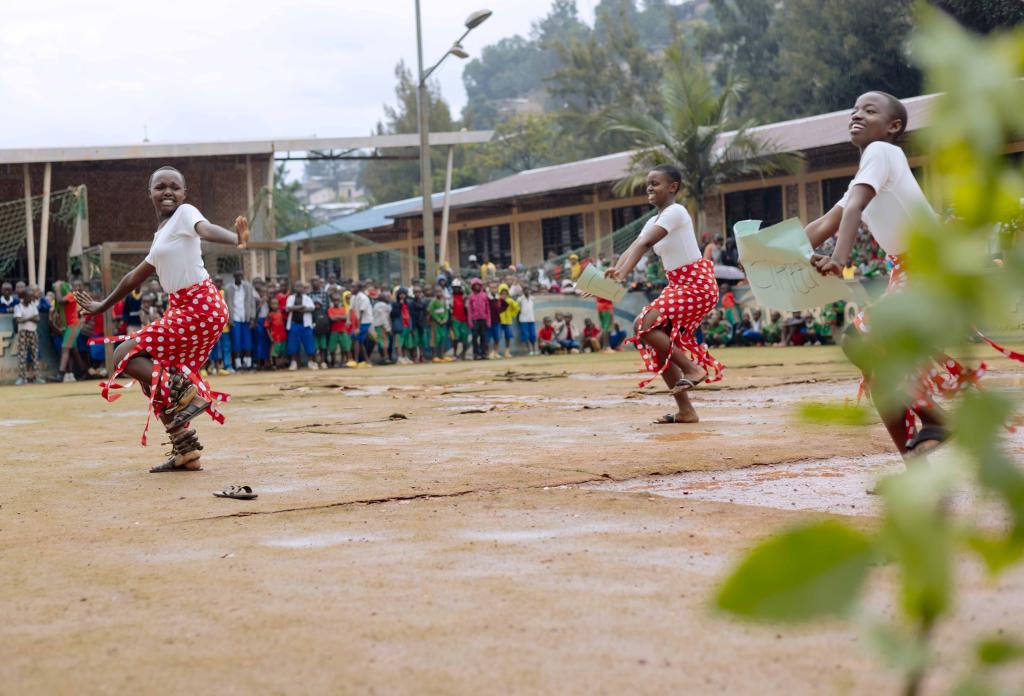
Under the theme “Igiti Cyanjye, Nkurane Na Cyo,” or “My tree, I grow with it,” students turned ideas into action. Over 100 students from ages 9 to 18 participated in an array of creative activities: a poetry slam, singing contests, a dancing contest, drawing exhibitions, and a nature-themed fashion show. The school yard buzzed with music, energy, and connection.
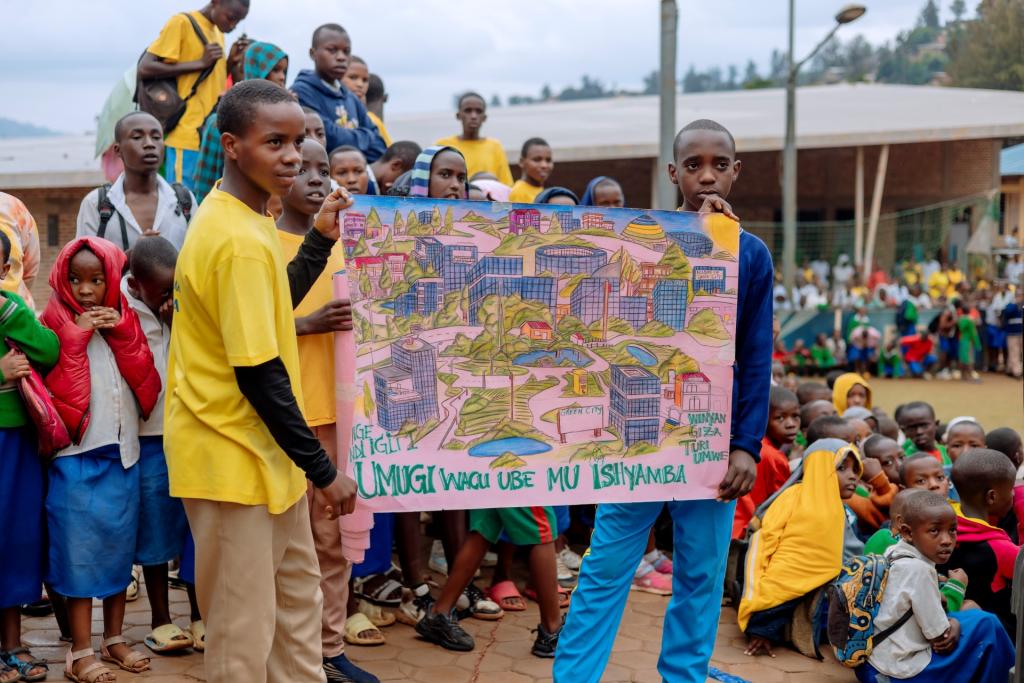
Behind it all was the RYWP team, who not only coordinated the event but also reimagined what climate education could look like. It was clear that to truly engage young people, they needed more than another lecture—it had to be a vibrant, lived experience.
Working closely with school staff, RYWP introduced creative categories based on how students best express themselves. The impact was instant. In front of an audience of 1,500 students, the performers made clear that climate change is not only a scientific issue, but an experience shared by communities everywhere.
“I am a Tree”: The power of performance
One phrase echoed again and again throughout the competition: “I am a tree.”
In song lyrics, poems, and spoken word performances, students imagined themselves as trees—leading, inspiring, and teaching. One student recited a poem called “Let Me Tell You About My Beautiful Tree,” giving voice to a tree that offered shade, fruit, beauty, and life.
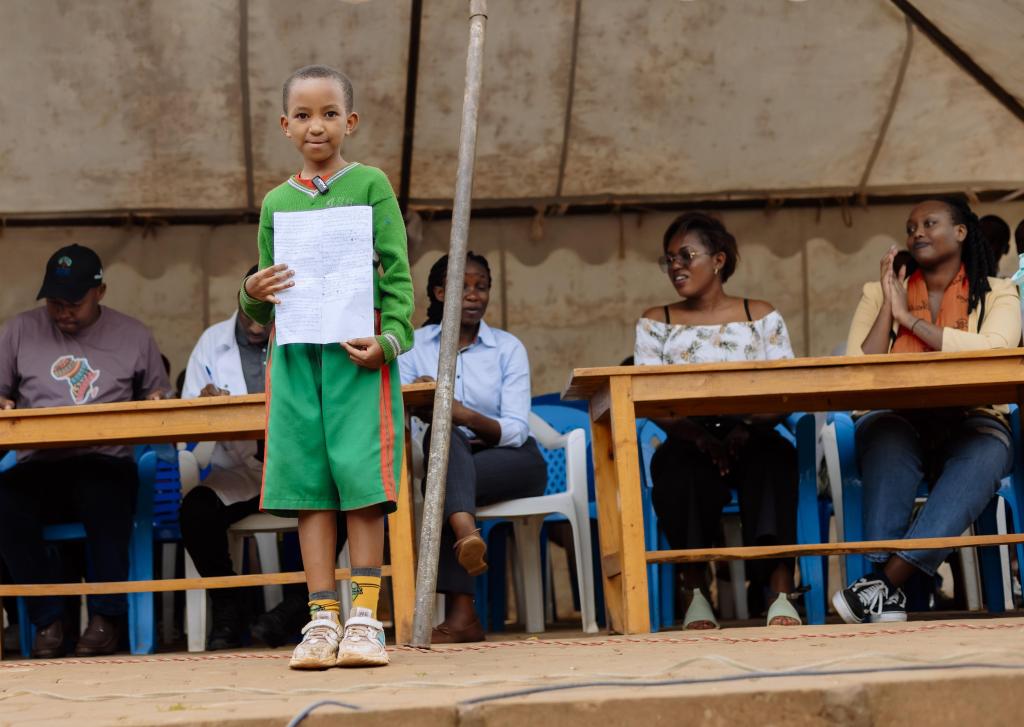
Another student presented a drawing titled “Don’t cut me, I am your friend,” portraying trees kneeling to humans, hands extended in peace, begging not to be cut down. One dance performance paired students as tree roots and branches, showing the interconnection between nature and humanity.
These were not just creative choices—they were emotional statements. By embodying trees, students made us feel the pain of nature. That kind of empathy stays with you.
Many students carried on with their art and awareness projects after the event ended, without any prizes to motivate them. The message had truly taken root.
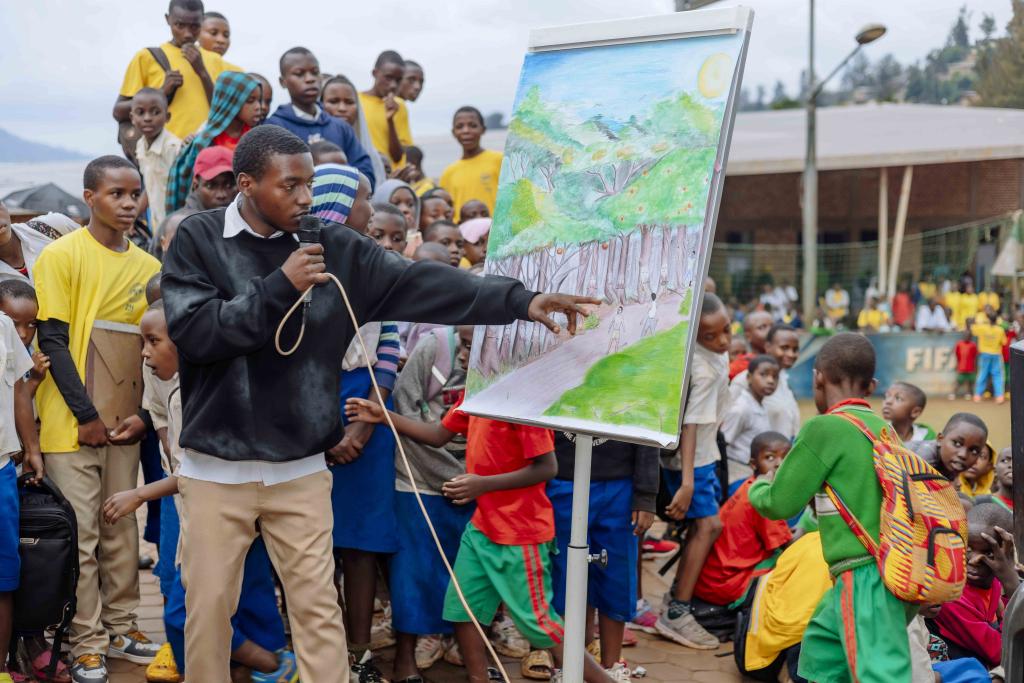
Students Take the Lead
One of the defining principles of the Green City Clubs is that students are not just participants: they are leaders.
Each club established a leadership committee, including president, vice president, event coordinator and secretary. These roles come with responsibility. Students organize meetings, design activities, and mobilize their peers. They choose which environmental projects to pursue, from setting up recycling stations to planning tree-planting drives. This is not just about school credits—these students are taking responsibility for their environment and showing others the way.
At Kimisagara and other schools, students brainstormed original songs, sourced materials for costumes made of leaves and bark, and even wrote scripts about environmental justice. Given the space to lead, students led boldly. This approach flipped the traditional dynamic. Instead of adults teaching kids, it became a mutual learning journey; students educating communities, parents, and even government officials through their projects.
Inclusive Engagement
By fostering genuine representation and fairness, the Green City Clubs did more than teach sustainability—they brought it to life, showing students how inclusion and climate action go hand in hand.
From the outset, gender equity was a priority. Each club election ensured balanced representation, resulting in 17 girls and 16 boys elected to leadership roles in all 16 schools engaged under the Green City Club Initiative. Two students with disabilities were also elected, ensuring that environmental action is accessible for all.
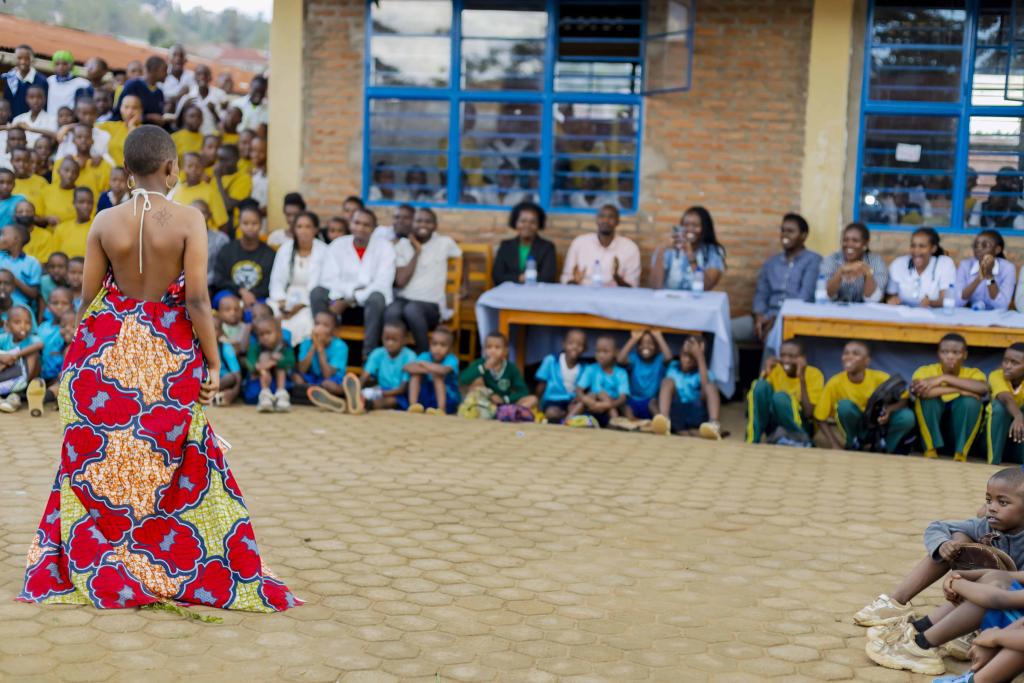
Moreover, participation in competitions and club activities was intentionally gender inclusive. From fashion showcases featuring both boys and girls in traditional eco-outfits, to poetry and dance duets, the project highlighted a truth often overlooked: everyone has a role to play in protecting the planet.
As one student poet boldly stated on stage, “A tree doesn’t choose who to shade, it protects all of us.”
Behind the Scenes
While students were the stars, none of this would have been possible without the steady support of school focal persons from each participating school.
They were with the students every day, organizing logistics, keeping schedules on track, making announcements, helping with rehearsals, and ensuring everything ran smoothly.
From coordinating club launches to setting up competition stages, focal persons were the project’s silent champions. They helped integrate the clubs into school life without disrupting academics, ensuring both educational quality and project success.
Perhaps more importantly, they became mentors, encouraging student creativity, celebrating small wins, and holding space for young leaders to grow.
What’s Next for Green City Clubs?
Building on the momentum of the environmental competition, the Green City Club's journey is now entering an exciting new phase of hands-on environmental action and strategic growth.
In the months ahead, all the participating schools will plant trees, a cornerstone of the club's practical impact. Through the “Grow With Your Tree” care and monitoring campaign, students will take responsibility for the tree's health and survival, learning how to nurture green life from the ground up. It's a long-term commitment to environmental stewardship rooted in accountability and care.
Additionally, the success of the environmental competition has sparked a growing interest in continued creative expression. More schools are now preparing for follow-up poetry, art, and performance showcases, providing platforms for students to express messages about climate change and the environment through talent and imagination.
Beyond awareness, the clubs are expanding into student-led recycling programs and school greening projects. These initiatives empower learners to address everyday environmental challenges in schoolyards, from waste separation to the creation of eco-friendly zones. Perhaps most excitingly, the team is now working on a Green City Club toolkit, a practical guide designed to help more schools and students replicate the model.
The vision is bold and clear: create a national network of youth climate champions who are not only aware of the environmental issues but fully equipped to inspire and to lead the response.

You might also be interested in
SUNCASA | Turning trash into treasures along the Jukskei River
SUNCASA and its local partners in Johannesburg, South Africa, launched a unique initiative that blends environmental action with artistic expression in the heart of Alexandra Township. Led by environmental artist and scientist Hannelie Coetzee, local artists have turned waste carried by the Jukskei River into thought-provoking sculptures and litter traps to tackle flooding and pollution in the region.
Year One of SUNCASA Progress: Lessons in Nature-Based Solutions
In its first year of implementation, the Scaling Urban Nature-based Solutions (NbS) for Climate Adaptation in Sub-Saharan Africa (SUNCASA) project has delivered significant results, laying the foundation for scaling up gender-equitable and socially inclusive climate adaptation efforts in 2025 and 2026 in Dire Dawa (Ethiopia), Kigali (Rwanda), and Johannesburg (South Africa).
Tackling flash floods, urban heat, and other climate change threats in three sub-Saharan African Cities
A new project will use solutions found in nature to improve the resilience of 2.2 million people in Dire Dawa (Ethiopia), Kigali (Rwanda), and Johannesburg (South Africa).
Challenging Gender Discriminatory Norms, Practices, and Beliefs in Sub-Saharan Africa
SUNCASA held a series of training sessions to support women and other underrepresented groups in overcoming the barriers preventing their access to natural resources and meaningful participation in nature-based solutions governance.