
Reimagining the River: How art can help us adapt to climate change
Thandokuhle Zungu, a gender equality expert supporting SUNCASA implementation in Alexandra Township, Johannesburg, reveals how imagination, storytelling, and the beauty of collaboration are reshaping climate action.
On the 10th of June 2025, I presented before an audience full of environmental leaders, gender advocates, and climate thinkers at the Nature, Climate, and Gender Symposium. I was there to represent the SUNCASA (Scaling Urban Nature-based Solutions for Climate Adaptation in Sub-Saharan Africa) Project, but I was also there to tell a story. Not just about climate adaptation or sustainability, but about a township called Alexandra, nestled on the banks of the Jukskei River in Johannesburg, where 1.2 million people live at the frontline of the climate crisis. A story about art, about women, about reclaiming dignity—and about the river that holds it all together.
A River in Crisis, a Community at Risk
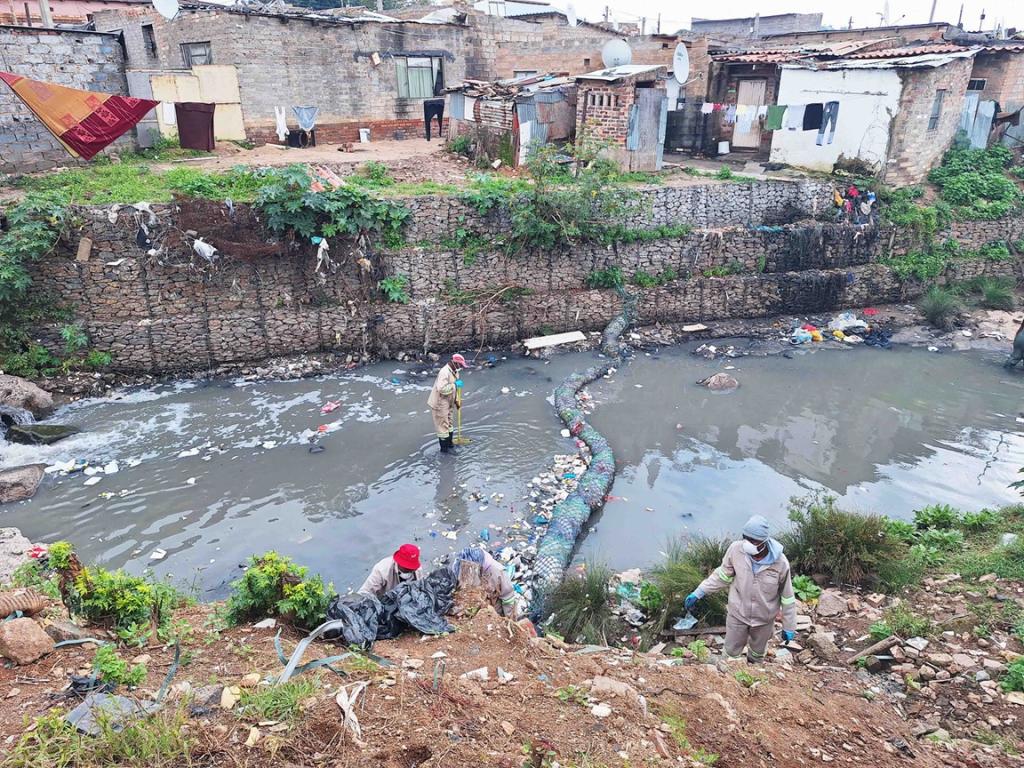
In Alexandra, the Jukskei River is both a lifeline and a threat. Floods arrive each season like clockwork—ripping through informal settlements, displacing families, and wrecking infrastructure. But while climate change might be the big-picture cause, the immediate trigger is often far more tangible: solid waste. Plastic debris, discarded appliances, and rotting refuse clog stormwater drains and choke the river.
And yet we’ve long known that solving this isn’t just about cleaning up. You can’t engineer your way out of neglect. What Alexandra needs—and what we dared to attempt—is a different relationship with the river. One that merges science with story, infrastructure with imagination.
Where Science Meets Storytelling: The river creatures are born
In 2022, a team led by Namina Foundation, Armour, and Willem Synman developed a simple litter trap—an elegant engineering fix to a persistent problem. Alexandra Water Warriors (AWW), the organization I proudly serve, installed the trap along the Jukskei. When David van Niekerk from the Johannesburg Inner City Partnership saw it, he didn’t just see a tool. He saw potential.
This vision sparked something bigger: a reimagined river corridor—a “Green Corridor” that’s alive with culture, nature, and public space. With the artistic vision of Hannelie Coetzee and support from the City of Johannesburg and the SUNCASA Project, the idea blossomed into the River Creature Series.
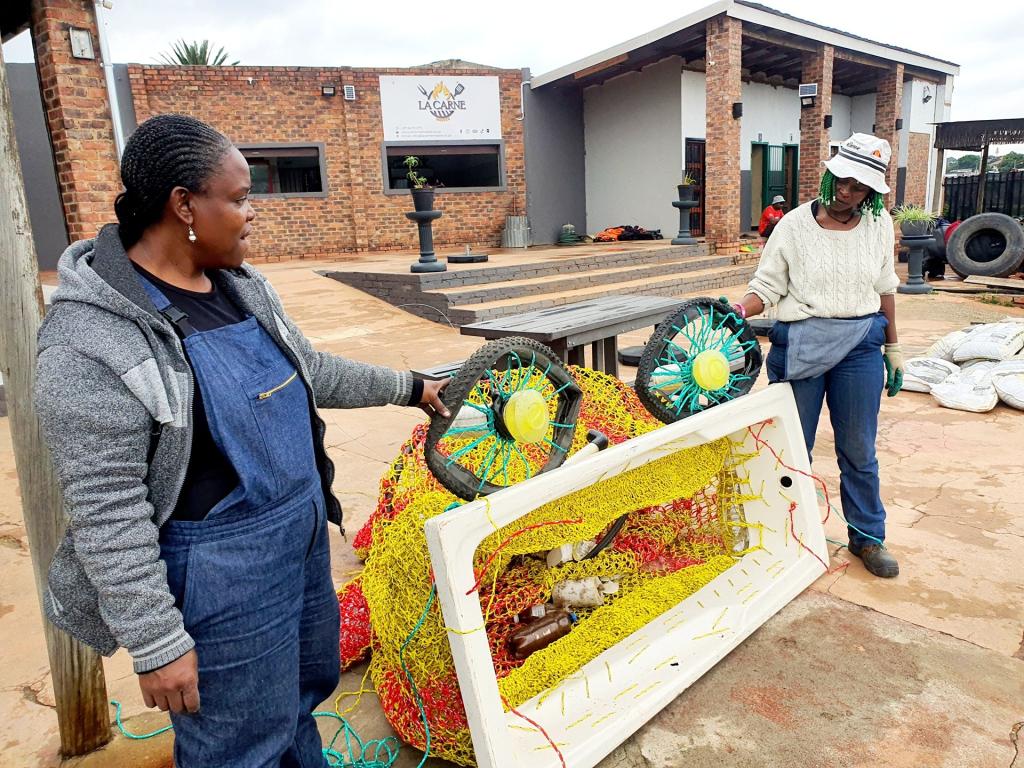
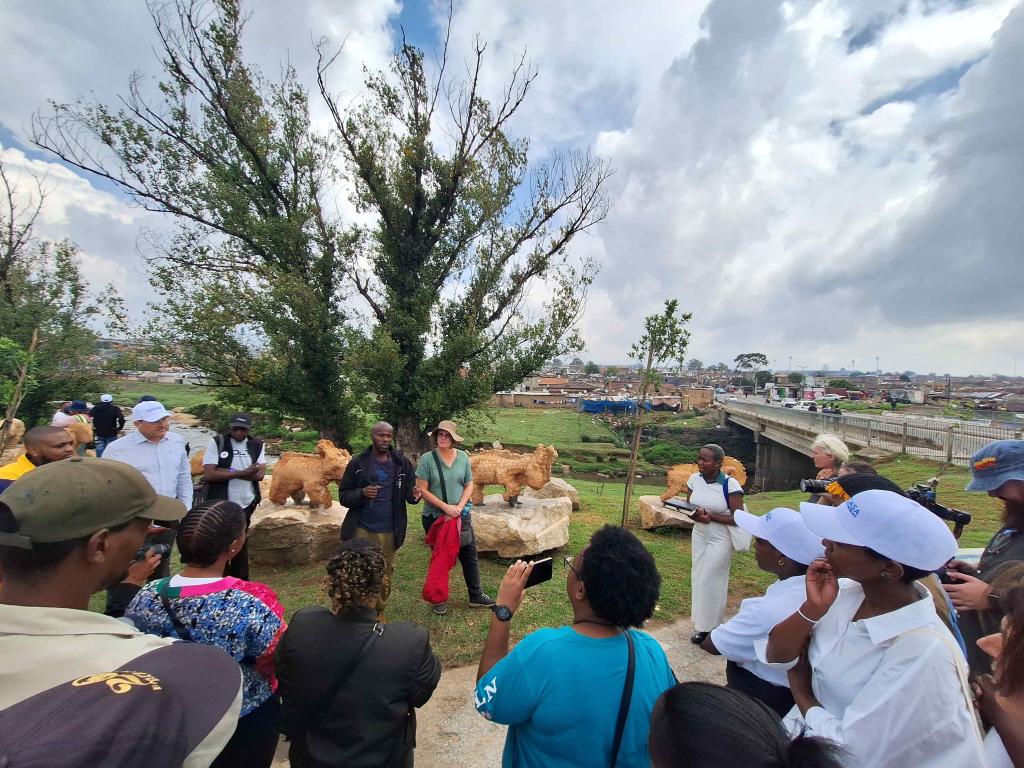
We took what was functional and made it magical. Litter traps became interactive public sculptures—part infrastructure, part storytelling. A bathtub turned into a fish. A metal frame into a crab. The river became a gallery.
Co-Creation and Community Wisdom
But this was never just about aesthetics. It was about ownership. Before a single sculpture was built, we held community workshops—deep, messy, joyful sessions where science met tradition, and art met oral history. The participants shared stories of the river and drew their versions of river creatures. These weren’t focus groups. They were ceremonies of reconnection.
As AWW, our role was to ensure Alexandra’s voice rang loud and clear. The sculptures—Goat, Bird, Rat/Mongoose, Crab, Water Spirit—are more than creative installations. They are reflections of our lived experience and our hope.
Inclusion Is a Climate Solution
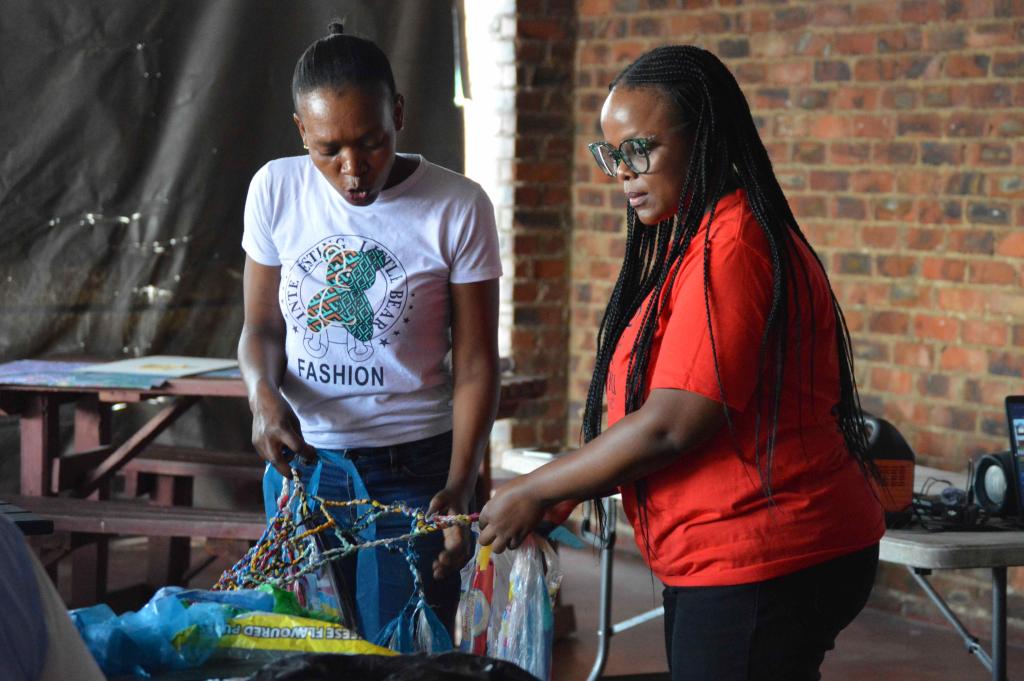
Of all the partners that have made this work possible, one stands out for me personally: the KULA Marolen Foundation, based in Alexandra, which trains local women to weave recyclable materials into the litter traps. They are the only organization in South Africa doing this.
For too long, women—especially in places like Alexandra—have been left out of the picture when it comes to innovation. KULA flips the script. They’ve turned waste into wages. They’ve made green jobs a reality. They’ve woven dignity into every fibre of those traps.
When I watch the KULA women work, I see more than skill: I see agency. I see mothers building futures. I see women no longer pleading to be included in the climate conversation but leading it.
A New Relationship With the River
Today, the Jukskei River feels different. Yes, the litter traps are helping. Yes, the art draws crowds. But more importantly, there’s a shift in mindset.
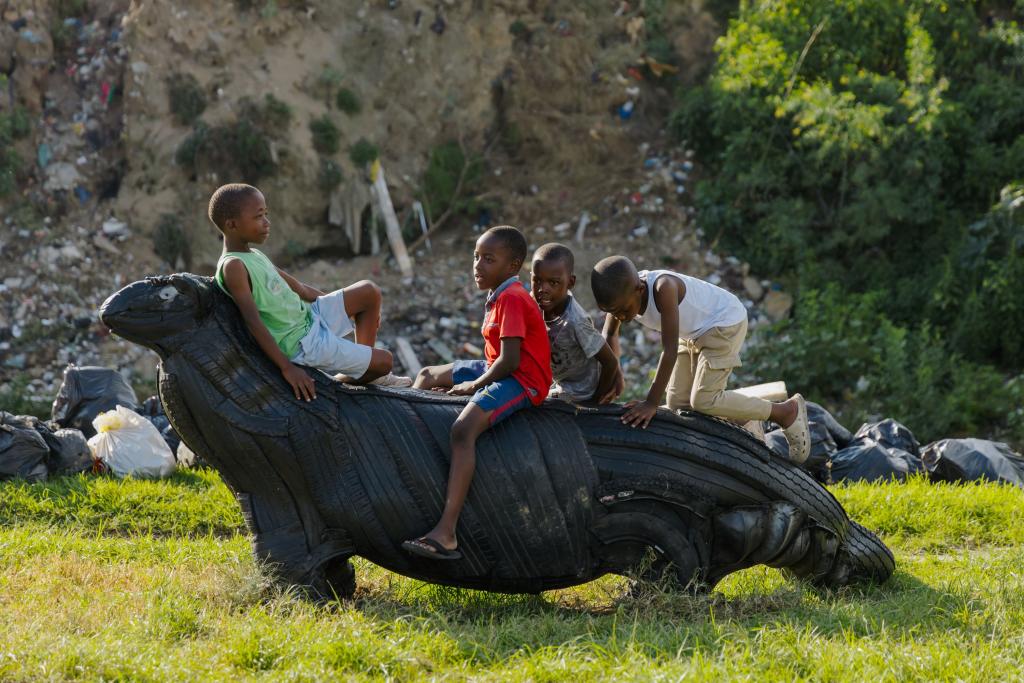
Children play near the sculptures and ask questions. Locals stop to take photos. Our Community Volunteers help clean and maintain the spaces. This river, once a no-go zone, has become a source of pride.
What’s unfolding here is not just adaptation. It’s restoration of land, but also of identity.
What Does It Really Take?
People often ask: How did SUNCASA gain traction in a place as complex as Alexandra, where government often fails, where trust is fragile, where the daily struggles are so urgent that climate change can feel like a luxury concern?
The answer is simple, but not easy. Show up. Listen. Stay. Co-create.
SUNCASA didn’t come in with a “solution.” It came with humility. It didn’t ask us to adapt to it—it adapted to us. From the first workshop to the final installation, it honoured Alexandra’s knowledge, pain, and power.
It also gave us something rare in climate work: beauty. Not the polished, distant kind—but raw, rooted, joyful beauty born of collaboration.
Why Art Matters in the Fight for Climate Justice
In places like Alexandra, technical language doesn’t always land. But a sculpture? A mural? A song? Those speak in tongues we understand.
Art bypasses shame and builds connection. It doesn’t lecture. It invites. That’s why the River Creature Series worked. It gave us symbols we could love—and therefore protect.
In Alexandra, where inequality is etched into the landscape, art has become a form of resistance. It claims space. It tells us we belong. It says: We are not invisible.
A Different Kind of Future
I don’t know what the next flood will bring. I don’t know whether funding for climate projects like SUNCASA will continue. But I do know this: when people see themselves in the solution, they protect it.
When women are empowered, families are transformed. When rivers become stories, they become sacred. And when art meets activism, transformation is not only possible—it’s irresistible.
In Alexandra, we’re not just adapting. We’re rewriting the script.
One river creature at a time.
One woman at a time.
One story at a time.
And that, I believe, is how change really flows.
Watch this video to learn more about the Arts and Litter Traps Initiative in Johannesburg.

You might also be interested in
SUNCASA | Turning trash into treasures along the Jukskei River
SUNCASA and its local partners in Johannesburg, South Africa, launched a unique initiative that blends environmental action with artistic expression in the heart of Alexandra Township. Led by environmental artist and scientist Hannelie Coetzee, local artists have turned waste carried by the Jukskei River into thought-provoking sculptures and litter traps to tackle flooding and pollution in the region.
Year One of SUNCASA Progress: Lessons in Nature-Based Solutions
In its first year of implementation, the Scaling Urban Nature-based Solutions (NbS) for Climate Adaptation in Sub-Saharan Africa (SUNCASA) project has delivered significant results, laying the foundation for scaling up gender-equitable and socially inclusive climate adaptation efforts in 2025 and 2026 in Dire Dawa (Ethiopia), Kigali (Rwanda), and Johannesburg (South Africa).
Kigali Shares Lessons on Flood Risk Reduction and Gender Equality With Other Sub-Saharan African Cities
KIGALI, RWANDA—Representatives from 14 organizations and city governments delivering the USD 21 million SUNCASA project will meet in Kigali this week to exchange experiences and insights on advancing nature-based solutions (NbS) for reducing flood and climate risk while improving the lives of women and vulnerable groups.
Challenging Gender Discriminatory Norms, Practices, and Beliefs in Sub-Saharan Africa
SUNCASA held a series of training sessions to support women and other underrepresented groups in overcoming the barriers preventing their access to natural resources and meaningful participation in nature-based solutions governance.