
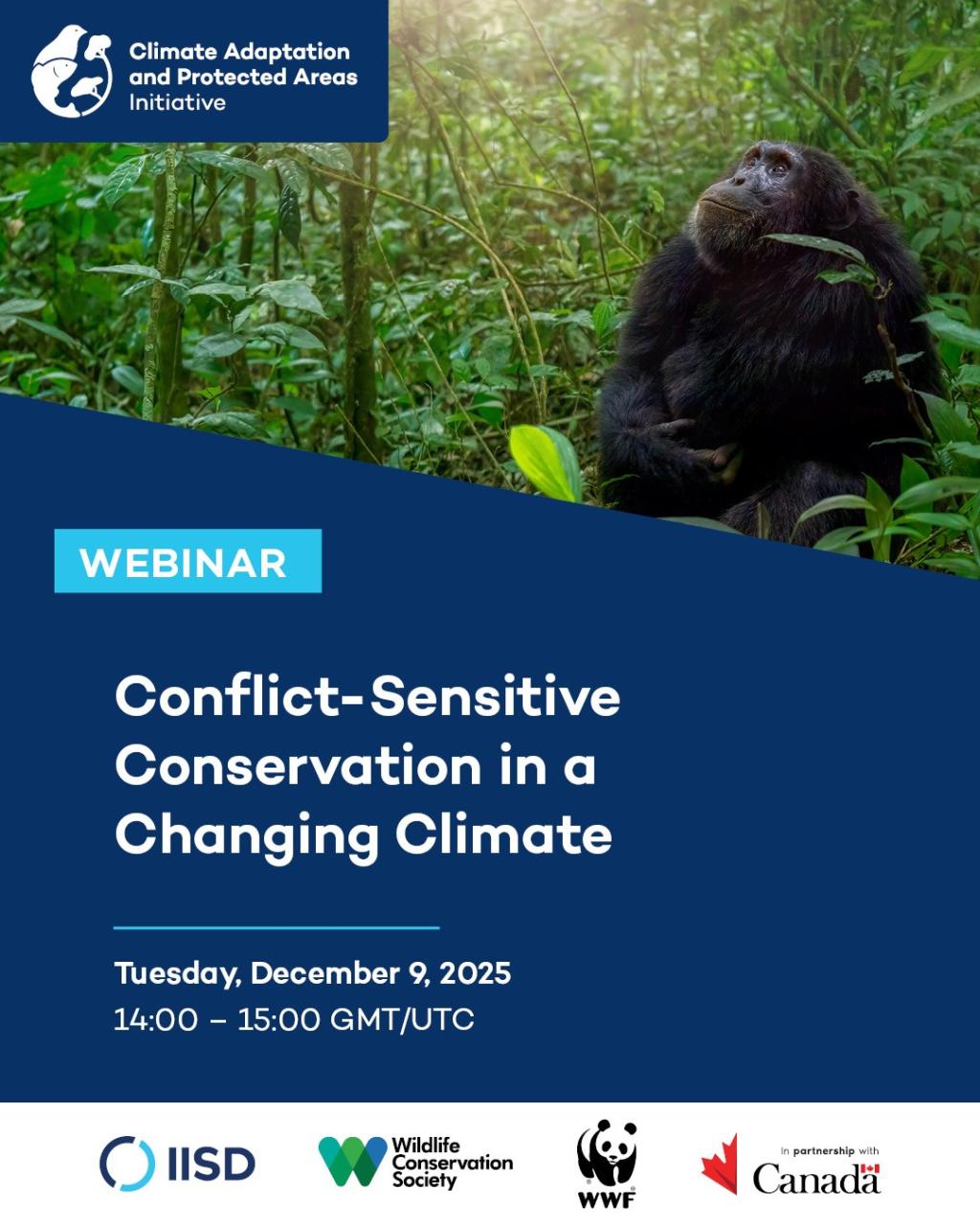
Conflict-Sensitive Conservation in a Changing Climate
On December 9, the International Institute for Sustainable Development (IISD) hosted a webinar to explore the links between climate change, biodiversity loss, and conflict, and the role that protected areas can play in addressing these challenges. The session unpacked what conflict-sensitive conservation is, why it matters, and how to design and implement effective interventions. Drawing on the panel’s expertise and real-world examples, the webinar also highlighted how conflict-sensitive approaches can help people and ecosystems thrive together in times of dramatic change.
About the Event
Protected areas are increasingly seen as an essential tool in tackling the twin crises of climate change and biodiversity loss. In addition to being critical refuges for flora and fauna, the health of these ecosystems and the services they provide underpins the resilience of local populations and economies.
Unfortunately, the impacts of both climate change and ecosystem degradation are rapidly changing protected areas and the context in which decisions on their management and conservation are made. Conservation planning and interventions have always been linked to conflict management, given that they are typically concerned with competing visions of natural resource control, access, and use. This is not necessarily a bad thing; such conflicts, if handled peacefully, can often lead to positive change. Climate change and ecosystem degradation are, however, complicating this context and can often be contributing factors in the rise of local resource-, water-, and land-based conflicts, tensions, and grievances.
As such, it is imperative that conservation interventions consider the broader social, economic, and environmental context in which they are designed, implemented, and evaluated, so that they do not unintentionally create new conflicts or exacerbate existing ones. This involves applying a conflict-sensitive approach to conservation matters.
Conflict-sensitive conservation encompasses activities designed and implemented to protect and conserve ecosystems and landscapes in a way that considers the causes, actors, dynamics, and impacts of conflict.
This 1-hour webinar:
- explored the links between climate change, biodiversity loss, and conflict, and the role of protected areas in addressing the climate and biodiversity crises;
- introduced conflict-sensitive conservation, exploring the benefits it offers to both people and nature, and why it is a vital component of both biodiversity protection and climate adaptation;
- showcased real-world examples of what this approach looks like in practice, including the conservation efforts in the Climate Adaptation and Protected Areas (CAPA) initiative (with a focus on human–wildlife conflicts driven by drought in Zambia);
- highlighted a Conflict-Sensitive Conservation e-learning course and some practical tips for designing and implementing conflict-sensitive conservation activities and interventions.
Moderator
- Onyinye Oguntoye, Communications Officer, IISD
Speakers
- Alec Crawford, Director, Nature for Resilience, IISD
- Nalucha Nganga, Country Director, World Wide Fund for Nature (WWF) Zambia
- Hesta Groenewald, Senior Associate Consultant – Conflict Sensitivity, PeaceNexus
You might also be interested in
Conflict-Sensitive Nature-Based Solutions
Discover how conflict-sensitive nature-based solutions (NbS) for adaptation can help people and ecosystems thrive together.
Inclusive Nature-Based Solutions for Climate Adaptation
Discover how climate change and biodiversity loss impact people differently and how inclusive nature-based solutions for adaptation can help.
What Does Climate Adaptation Look Like in Action? Here are nine locally led, nature-based ideas
What does Nature-based solutions (NbS) for adaptation look like for the communities involved? From cultivating seaweed seeds to planting hurricane-resistant trees, here are nine locally-driven ideas.
How to Make Nature-Based Solutions for Adaptation Work for Everyone
Effective nature-based solutions (NbS) for adaptation start with integrated climate risk assessments. These take-aways will help practitioners plan for inclusive and sustainable NbS.