
SUNCASA Integrated Cost-Benefit Analysis for Dire Dawa, Ethiopia | Infographic
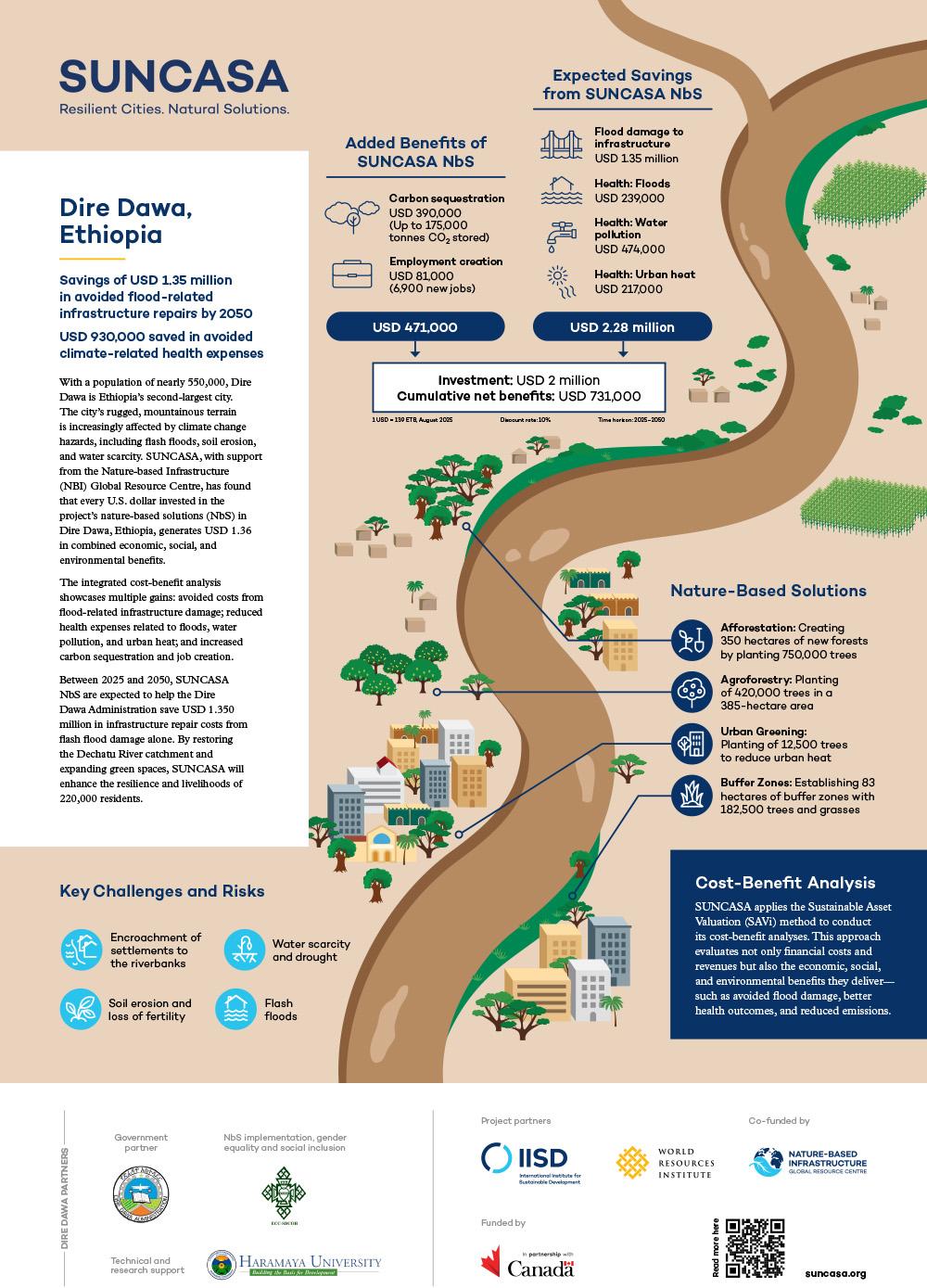
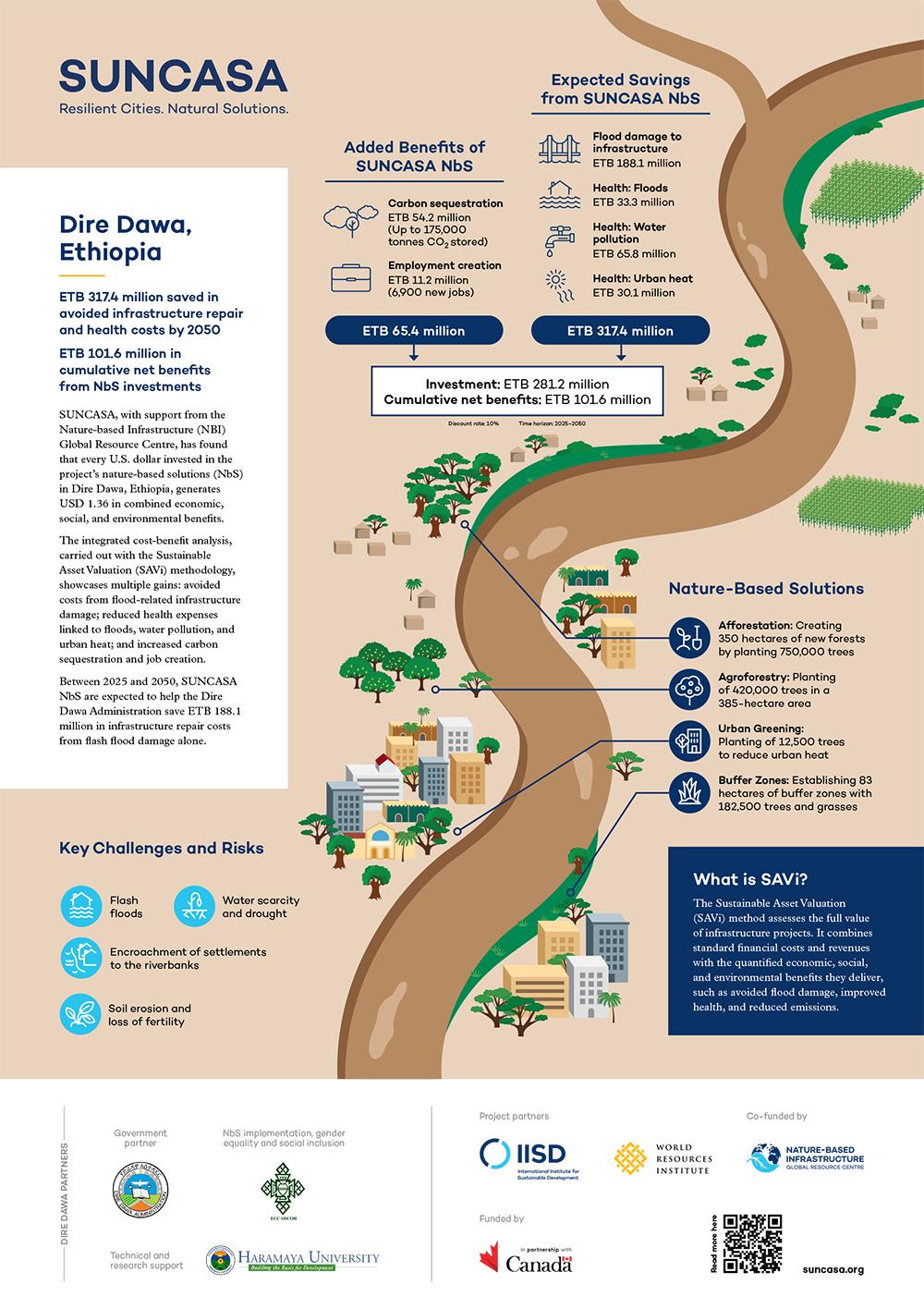
Dire Dawa, Ethiopia, faces severe climate risks from floods, soil erosion, and water scarcity. These infographics show the impacts nature-based solutions (NbS) could have on the region based on an integrated cost-benefit analysis.
In Dire Dawa, Ethiopia, flash floods, soil erosion, and water scarcity pose serious climate threats, especially for people living in flood-prone urban and rural areas. Through the SUNCASA initiative, the International Institute for Sustainable Development, the World Resources Institute (Africa), and local partners and communities are restoring the Dechatu River catchment with NbS to reduce flooding and erosion, enhance groundwater recharge, and expand agroforestry and urban green spaces.
A new integrated cost-benefit analysis, which follows the Nature-Based Infrastructure Global Resource Centre's Sustainable Asset Valuation (SAVi) methodology, highlights the tangible impacts of these NbS interventions. By 2050, they are projected to
- save USD 1.35 million in avoided flood-related infrastructure damage,
- avoid USD 930,000 in climate-related health costs, and
- create nearly 6,900 jobs.
SUNCASA's NbS are strengthening resilience for over 220,000 people in one of Ethiopia's most climate-vulnerable regions. The infographics offer a visual overview of the long-term benefits of SUNCASA's NbS in Dire Dawa, with values presented in U.S. dollars and Ethiopian birrs. Read the full report here.
You might also be interested in
Sustainable Asset Valuation (SAVi) of Tree Planting in Addis Ababa, Ethiopia
This report presents the results of a Sustainable Asset Valuation (SAVi) assessment for tree planting in Addis Ababa, Ethiopia.
IISD Annual Report 2024–2025
IISD's reputation as a convenor, a trusted thought leader, and a go-to source on key issues within the sustainable development field is stronger than ever.
Sustainable Asset Valuation of Mangroves and Wetlands for Coastal Resilience in Mozambique
This report assesses how the restoration of mangroves and wetlands in Mozambique can protect communities and deliver strong economic returns.
Nature That Works
This publication shows how natural infrastructure can contribute to meeting water management needs, while also providing social, economic, and environmental benefits.